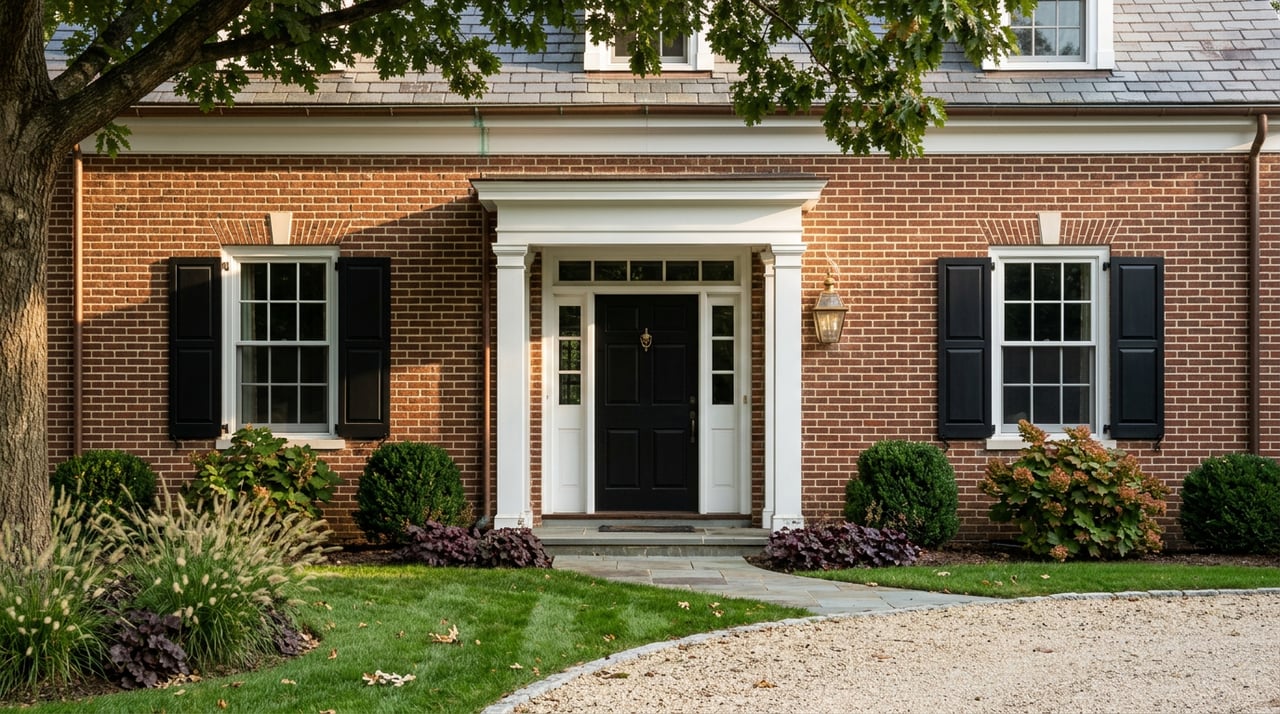
Franklin Lakes' Median Price Hides Two Different Housing Markets
Walk a handful of open houses in Franklin Lakes this summer and you'll start noticing the same detail: a green plastic cap poking out of an otherwise manicured lawn, usually somewhere between the patio and the property line. Most buyers step right past it. It's a septic riser, and in Franklin Lakes it's less an oddity than a fact of life for a large share of the housing stock. That single detail, easy to miss on a walkthrough, is doing more to explain this town's confusing price data than any single comp.
Here's the thing nobody mentions when they quote you "the Franklin Lakes median": there isn't one market here. There are two, stitched together under a single town name, and the seam between them runs under the lawn.
If you've been cross-referencing home values online, you've probably noticed the numbers don't agree with each other. As of mid-2026, depending on which site you check, Franklin Lakes looks like a town where the "typical" home costs anywhere from roughly $1.35 million to $3 million.
| Source | Figure | Window |
|---|---|---|
| Zillow's smoothed home value estimate | about $1.35 million | trailing 12 months through mid-2026 |
| One portal's median sale price | about $1.75 million, up 22% year over year | trailing 12 months through mid-2026 |
| One portal's reported median for homes sold | about $2.24 million | December 2025 |
| A third portal's median sale price | about $3.0 million | March 2026, based on 7 closed sales |
None of these numbers are wrong. They're measuring different things, and the gap between them is the real story. A median built from seven closed sales in a single month swings wildly based on whether one or two seven-figure estate sales happened to close that month. A smoothed estimate averages out over a longer window and gets pulled down by the older, smaller homes that never show up in the splashy new listing photos. When a town's inventory ranges from a 1970s ranch on well water to a newly built colonial with public utilities on the same street, "the median" stops being a useful number and starts being a coin flip depending on which seven houses happened to sell.
The mechanism underneath that spread is what actually matters if you're comparing Franklin Lakes to another Bergen County town: whether a given house sits on municipal water and sewer, or on a private well and septic system.
Franklin Lakes does have a sewer utility, and it does have a "Sewer District No. 1" written into the borough code. But read the ordinance and the picture that emerges is narrower than the name suggests: it describes a specific developer-installed line, a defined group of properties on an exhibit filed with the borough, and an $8,000 connection fee for anyone who wants to hook up. Connecting isn't required. The code gives property owners along that line "the option, but not the obligation, to connect" at their own cost.
That's a small piece of legal language with a large practical consequence. Public sewer in Franklin Lakes isn't a borough-wide utility the way it is in denser towns nearby. It's a targeted service extension tied to specific developments, which is consistent with what shows up constantly in current Franklin Lakes listings: language like "new septic system," "well and septic," and "well tank" appearing across active and recently closed listings, from modest raised ranches on half-acre lots to multi-million-dollar estates on two-acre parcels. Septic isn't a fallback for the town's less expensive homes. It runs straight through the price range.
Franklin Lakes takes septic seriously enough to have written its own licensing system into the borough code, separate from anything the state requires. Anyone who installs, repairs, or cleans septic systems in town has to hold an annual license from the Franklin Lakes Board of Health, backed by a $30,000 surety bond payable to the borough.
The detail that matters most for anyone buying or selling here is a conflict-of-interest rule buried in that same chapter: a company that inspects a septic system in connection with a resale or a mortgage commitment is barred from also contracting to repair or replace that same system. In plain terms, the person telling you the septic system failed can't be the same person who profits from replacing it. It's a small structural safeguard, but it's the kind of detail that only shows up if you've actually read the local code rather than a generic septic explainer, and it's worth knowing before you hire an inspector during due diligence.
Septic sits on one side of this equation. Water sits on the other, and state law has its own timeline for that.
Under New Jersey's Private Well Testing Act, any home sale where the property draws drinking water from a private well triggers a mandatory testing requirement, and the process has a few fixed steps:
None of this blocks a sale if the water fails a standard. The law's whole purpose is disclosure, not prohibition. But the testing itself takes time, commonly ten to thirteen business days turnaround from a certified lab, and skipping it or rushing it is not an option once you're under contract on a well-served Franklin Lakes property.
Here's where the two threads meet. Say a septic inspection during due diligence turns up a problem. New Jersey septic contractors working across the northern part of the state have converged on a fairly consistent range for what a full system replacement costs in 2026: somewhere between $15,000 and $40,000, depending mostly on soil conditions and whether the drain field needs replacing along with the tank. Sites with poor percolation, clay soil, or a high water table push toward the top of that range. A straightforward tank-only swap with a healthy drain field lands closer to the bottom.
That range rarely shows up anywhere in a listing's price-per-square-foot. It shows up at the closing table, and it shows up in financing, since most conventional mortgage lenders won't approve a loan against a home with a documented failing septic system. That combination, a five-figure repair cost plus a financing wall, is exactly why septic problems tend to force a price reduction that's larger than the repair itself. Sellers who get ahead of it, scheduling an inspection well before listing rather than waiting for a buyer's inspector to find it, keep far more control over the outcome.
This is the actual mechanism behind Franklin Lakes' unstable median. It isn't that the town has one price and the data sources disagree on how to measure it. It's that the town genuinely contains two different cost structures depending on utility type, and any given month's sales mix will tilt the "median" toward whichever side happened to transact.
Does every home in Franklin Lakes have septic and well? No. Some sections, particularly near the developer-built line described in the borough's Sewer District No. 1, have access to public sewer, and some properties draw water from municipal sources. The mix varies block by block, which is exactly why it's worth confirming for any specific address rather than assuming based on the town's overall reputation.
How much extra time does well testing add to a closing timeline? Plan for the lab turnaround, typically ten to thirteen business days, plus the requirement that both parties review results before title can close. Building that into the contract timeline early avoids a scramble later.
Can a septic problem actually kill a sale? It can stall one, especially if a lender won't finance the property as-is. It doesn't have to end the deal. A pre-listing inspection, or a clear repair credit negotiated into the contract, keeps the transaction moving instead of leaving it to unravel during attorney review.
If you're comparing Franklin Lakes to another Bergen County town and the median price is the only number you've looked at so far, you're missing the variable that actually determines what a specific house will cost you to own. Working through that variable, house by house, is exactly the kind of groundwork The Ivanov Group does before a client ever writes an offer. If you want a clearer read on what a particular Franklin Lakes property actually costs once you factor in its utilities, start with a free instant home valuation and a conversation about the numbers underneath it.
Stay up to date on the latest real estate trends.

Whether you're looking to invest, build, or find your dream home, The Ivanov Group is here to help. Contact us today to learn more about how we can be a part of your real estate success story.