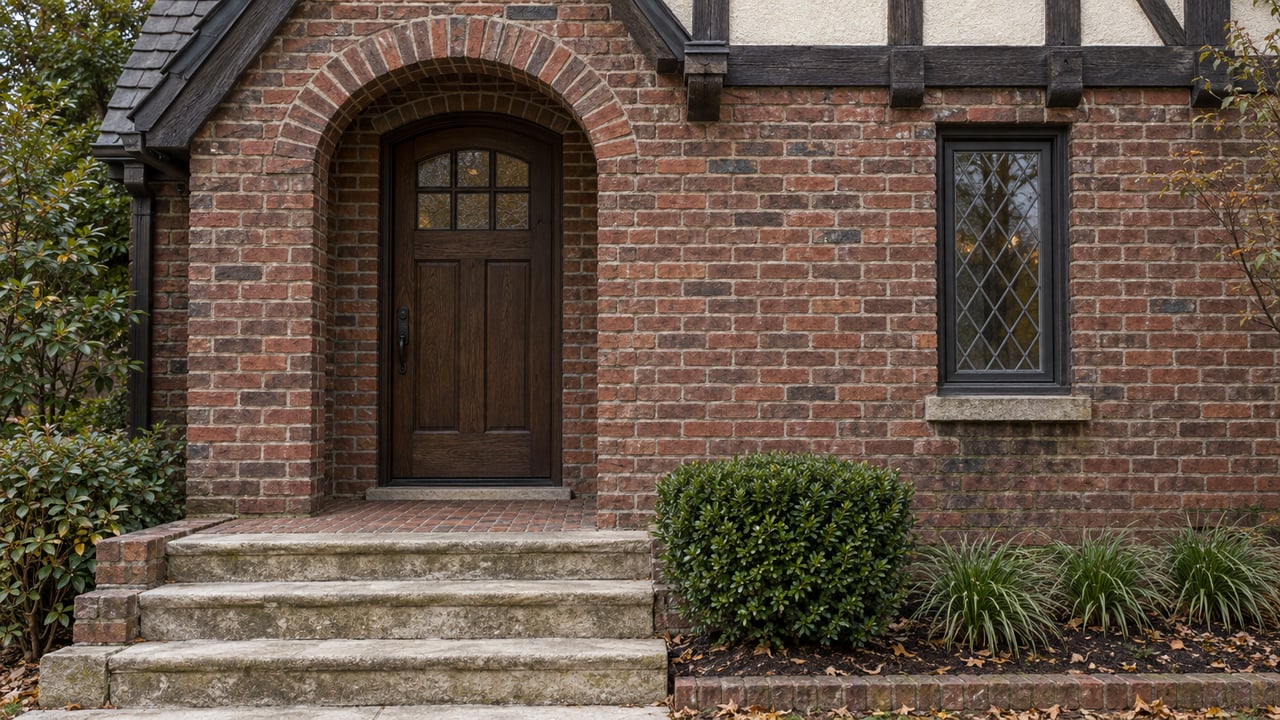
New Brunswick Doesn't Have One Rental Market. It Has Three, and HELIX Is Building a Fourth.
Two-family houses within a few blocks of the Rutgers Student Center tend to carry a specific kind of listing: one lease, signed by a single tenant group, covering the full term at once. A few streets over, it's just as common to see a five-bedroom property with occupancy approval and city-issued on-street parking permits. Those details don't appear in a median home price.
That's the piece missing from most conversations about buying rental property in New Brunswick right now. Investment write-ups this year have pointed to a citywide median home price in the $625,000 to $650,000 range and an 8 to 10 percent appreciation forecast for 2026, driven by downtown redevelopment and proximity to Rutgers University and Johnson & Johnson's headquarters. Those numbers are accurate. They're also an average of three tenant pools that behave nothing alike, and a fourth is being built into the ground right now, one block from the train station.
The first pool sits within a mile of the College Avenue campus. These are 2-to-4 unit multifamily properties, typically trading between $400,000 and $550,000, generating $3,600 to $4,800 in monthly gross rent. The tenant is almost always a group of Rutgers students, leased as a single unit rather than as individual renters. That structure has a real consequence for how the property performs. A student-occupied house doesn't turn over gradually across the calendar the way a normal rental does. It turns over once a year, around the academic cycle, and the next year's lease is often locked in well before the current one ends. Miss that window and the unit doesn't sit vacant for a month. It sits vacant for a semester, sometimes a year.
The city's own occupancy and parking rules layer directly onto this.
The second pool is the Somerset section, where single-family homes run $450,000 to $550,000 and rent to a different kind of tenant entirely: professionals and families affiliated with Johnson & Johnson or the hospital systems clustered downtown. These leases run on a standard 12-month structure, staggered across the calendar rather than concentrated around August. Turnover is lower. Rent growth is steadier but less dramatic. This is the pool that behaves the way most out-of-state investors assume all of New Brunswick behaves, and it's only about a third of the picture.
The third pool is the citywide blend that produces the $625,000 to $650,000 median: downtown condos, mixed lease structures, and the properties that don't fit neatly into either the campus or Somerset categories. New Brunswick is 78 percent renter-occupied, more than double the 36 percent statewide rate, according to city and regional planning data compiled for the area's transit village designation. That same data shows median rent has climbed 20 percent since 2000 while renter household income, adjusted for inflation, has fallen by roughly 7 percent over the same period. A city that rental-dependent, with that kind of gap between what rent costs and what renters earn, doesn't move as one market. It moves as whichever pool is under the most pressure at a given moment, and right now that pressure is concentrated near campus, where student demand keeps pricing that pool separately from everything else in the city.
Across Albany Street from the New Brunswick train station, a $700-million-plus development called HELIX is adding a tenant category that didn't exist in this city five years ago. The project, led by New Brunswick Development Corporation, spans three buildings and roughly 1.5 million square feet, anchored by Rutgers, Rutgers Robert Wood Johnson Medical School, Hackensack Meridian Health, RWJ Barnabas Health, and Middlesex County. The state has approved more than $730 million in Aspire tax credits across its three phases, the largest life sciences and medical education investment in New Jersey's history according to the city's own project materials.
The first building, H-1, houses the New Jersey Innovation HUB and a research and medical education facility for Rutgers, along with a 30,000-square-foot science incubator branded the Johnson & Johnson Exchange, built specifically to house startups. That's a tenant type New Brunswick's rental stock has never had to absorb at scale: corporate and life-sciences employees who aren't students and aren't already embedded in the hospital system, arriving because their employer just opened an office two blocks from the train.
The retail signals point the same direction. Strand Market, a food hall Devco has positioned as a gathering spot for the district, debuted at the HELIX site earlier this year. Clydz, a bar and restaurant that's been a downtown fixture since 1997, is relocating into HELIX H-1 this fall, trading its original address for a spot inside the innovation district. When a business with that kind of institutional memory in a downtown moves toward a new corridor rather than away from it, that's a read on where foot traffic and daytime population are actually headed, independent of what any appreciation forecast says.
None of this means the HELIX corridor is priced correctly yet. It means the pricing is still being discovered. A property within a few blocks of H-1 today is a bet on 2026 and 2027 leasing at the HUB and the medical school, not a purchase backed by an established rent roll the way a Somerset-section single-family is.
| Pool | Typical entry price | Lease structure | Primary tenant | Main risk |
|---|---|---|---|---|
| Near-campus 2-4 unit | $400,000-$550,000 | Single lease to one group, renews on an academic cycle | Rutgers students | Vacancy isn't gradual. Miss the spring leasing window and the unit sits empty for a semester or more |
| Somerset-section single-family | $450,000-$550,000 | Standard 12-month, staggered turnover | Johnson & Johnson and hospital-affiliated professionals | Lower turnover, but slower rent growth than the campus pool |
| HELIX corridor / downtown | Citywide median $625,000-$650,000, corridor pricing still forming | Emerging, likely standard 12-month once occupied | Life-sciences and corporate employees new to the city | Absorption hasn't been tested. Pricing today reflects 2026-2027 leasing that hasn't happened yet |
The practical difference shows up in financing and exit timing more than in the purchase price. A near-campus property with a single-group lease is, functionally, a one-tenant business with an annual contract renewal, and lenders and buyers should underwrite it that way. A Somerset-section single-family behaves like a conventional buy-and-hold, with the kind of staggered turnover that makes cash-on-cash returns in the 6 to 8 percent range, cited in recent investment analysis of the market, a reasonable planning assumption. A HELIX-adjacent property is neither. It's a position taken ahead of confirmed demand, and its value over the next two years will track how quickly the Innovation HUB, the medical school, and the J&J Exchange incubator actually fill their space, not how the citywide median moves.
Why does an 8 to 10 percent appreciation forecast apply to "New Brunswick" as a whole? It's a citywide blend. The forecast reflects average movement across all three current pools, weighted toward the downtown transformation tied to HELIX and related mixed-use development. It isn't a guarantee that a specific near-campus or Somerset-section property will appreciate at that rate, since those pools have historically moved on different timelines tied to academic demand and hospital system hiring rather than downtown construction news.
Is a single-group student lease riskier than it looks on paper? The monthly number can look strong, since a 2-4 unit near campus can generate $3,600 to $4,800 in gross rent. The risk is concentration: one lease, one group, one renewal date. If that group doesn't renew and the unit misses the spring leasing cycle, the loss isn't a few weeks of vacancy, it's most of the following academic year.
If you're weighing a property against New Brunswick's median rather than against the specific pool it actually belongs to, that's the conversation worth having before an offer goes in. The Ivanov Group works with investors across Central Jersey on exactly this kind of pool-by-pool underwriting, and our instant valuation and equity analysis tools are built to price a property against its actual comparable set, not a citywide average. Get Your Instant Home Valuation and see which pool your target property is really in.
This article is general information, not legal, tax or financial advice. Consult a qualified professional about your situation.
Stay up to date on the latest real estate trends.

Whether you're looking to invest, build, or find your dream home, The Ivanov Group is here to help. Contact us today to learn more about how we can be a part of your real estate success story.