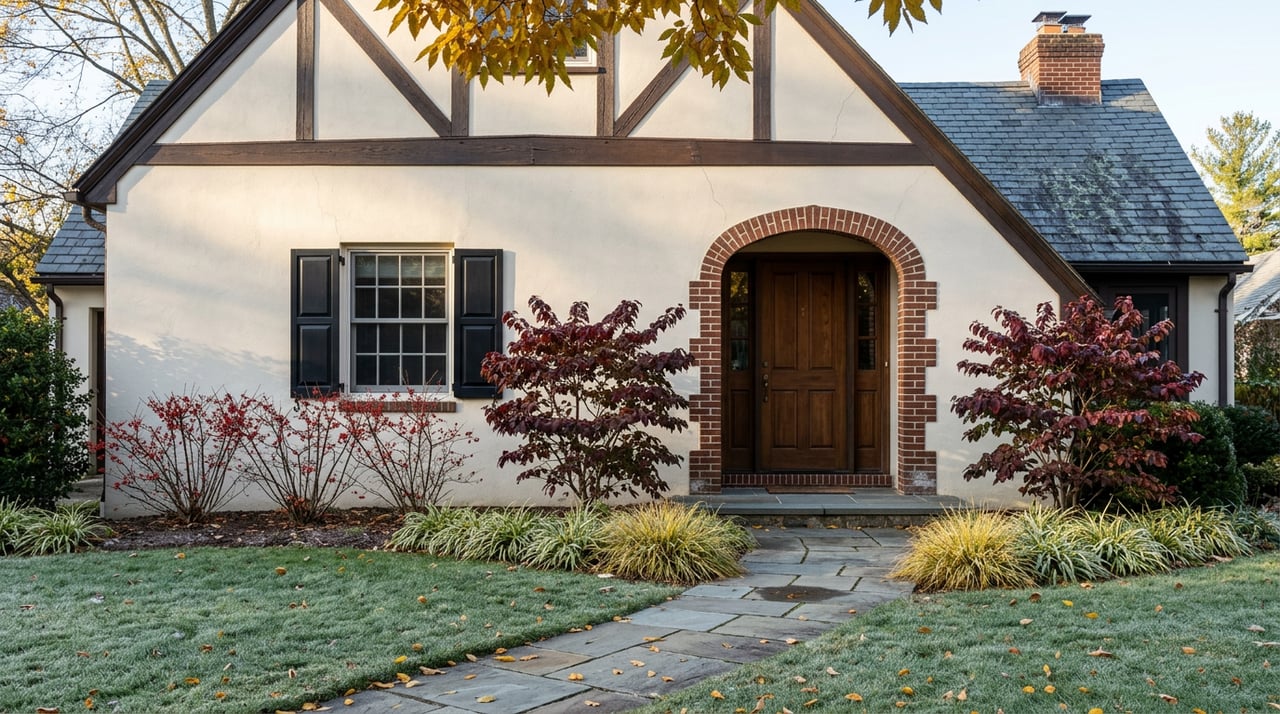
Ridgewood's Train Premium Is Real. The "Direct Line to Manhattan" Isn't.
Scroll through enough Ridgewood listings and you'll start to notice a pattern in the language. A colonial near Ridgewood Country Club promises "hassle free commute to NYC via Train." A rental near downtown touts easy access to "Town, Train, Shops, and Restaurants." A city guide for the village describes the station as offering "frequent service to lower Manhattan," with residents getting into the city "within an hour."
None of that is dishonest, exactly. But it skips a detail that matters if you're comparing Ridgewood against other Bergen County towns on the strength of its commute: there is no train that runs from Ridgewood Station straight into Manhattan without a change of trains somewhere along the way. If you're weighing a walk-to-the-station premium against a quieter block ten minutes further out, that gap between the marketing and the mechanics is worth understanding before you write an offer, not after your first month of actually making the trip.
Ridgewood Station sits at Garber Square, at the foot of West Ridgewood Avenue, on what NJ Transit designates the Main-Bergen County Line. Every weekday rail trip from that platform to New York Penn Station requires a transfer, almost always at Secaucus Upper Level, where you switch from the Bergen County Line equipment onto a Northeast Corridor or Morris & Essex train for the final leg into Manhattan. According to current NJ Transit schedule data, the average door-to-Penn-Station trip runs about 56 minutes, with the fastest itineraries closer to 43 minutes. Every one of those trips, fast or slow, includes that transfer.
There's a second option that skips the Secaucus change: ride the Bergen County Line straight into Hoboken Terminal, which the line does serve without a transfer. But Hoboken isn't Manhattan. From there, getting to Midtown or Lower Manhattan means boarding a PATH train or a ferry, which is its own short trip with its own wait. So the honest version of "direct to NYC" is closer to "no-transfer to New Jersey's side of the river, then one more leg to get into the city itself."
This isn't a knock on the line. It's a structural fact of how the system was built, and understanding why makes the whole picture clearer.
NJ Transit's Morris & Essex Lines, which run through towns like Millburn and Summit, gained true one-seat "Midtown Direct" service into Penn Station in 1996 through what's known as the Kearny Connection, a rail link built specifically to route those electrified trains into Manhattan without requiring a change of equipment. The Bergen County Line and the broader Main Line never received an equivalent connection. Trains on those lines have historically relied on diesel or dual-mode locomotives, and the routing into Manhattan simply doesn't run through the same tunnel access that Midtown Direct service uses.
That's the actual reason a house in Ridgewood and a comparably priced house in, say, Summit, can offer meaningfully different commute experiences even though both towns market themselves as NYC-adjacent. It's not that one town's transit authority tries harder. It's that one line has a direct rail connection into Manhattan and the other doesn't, and no amount of listing copy changes that.
Here's how the three realistic options from Ridgewood actually compare:
| Option | Transfer required | Typical time to Manhattan | Notes |
|---|---|---|---|
| NJ Transit rail via Secaucus to Penn Station | Yes, at Secaucus Upper Level | ~56 min average, 43 min fastest | Most common weekday commute route |
| NJ Transit rail direct to Hoboken, then PATH or ferry | No rail transfer, but PATH/ferry connection needed | Varies by PATH wait and destination | Useful for Downtown or West Side destinations |
| NJT bus 163 or 164 to Port Authority | None, true one-seat ride | Varies with Route 17/GSP traffic | Boards at Ridgewood Park & Ride or Van Neste Square |
None of this means the premium attached to Ridgewood's walkable core is a myth. It isn't. Local agents across Bergen County consistently point to the blocks nearest the station and East Ridgewood Avenue as commanding a real premium over comparable homes a mile or more out, and that pattern shows up in listing after listing tied to Maple Avenue, Franklin Turnpike, and the streets around Ridgewood Country Club. What's worth being precise about is what that premium is actually buying.
It isn't buying a one-seat ride. It's buying a shorter, more predictable first leg of a two-leg trip, plus the ability to walk to the platform instead of driving and parking, in a village where downtown lots run on meters and three-hour limits. For a commuter who transfers at Secaucus regardless of where in town they start, shaving ten minutes off the walk to the station doesn't erase the transfer. It just makes the part of the trip you control a little shorter.
Current pricing data underscores how much of this premium sits inside a wide range rather than a single clean number. Redfin data covering the three months ending June 2026 put Ridgewood's median sale price at $1.8 million, up sharply from the year before, while Zillow's typical home value as of June 2026 sat closer to $1 million, and Movoto recorded a $1,050,000 median sale price for homes that closed in July 2026. Part of that spread comes from methodology. Part of it comes from the fact that Ridgewood's housing stock, from postwar condos to grand Tudor homes on acreage, spans a genuinely wide range, and a walk-to-train premium on a starter home reads very differently in dollar terms than the same premium applied to a $2 million colonial.
The practical takeaway: if a listing leans on train access as a selling point, ask what that access actually looks like at 7:45 on a Tuesday morning, not what the schedule promises in the abstract.
The detail that gets skipped most often in commute-focused house hunting is the bus. NJ Transit's 163 and 164 routes run from the Ridgewood Park and Ride and Van Neste Square directly to the Port Authority Bus Terminal in Midtown, with no transfer required. For a buyer whose office sits closer to Port Authority than to Penn Station, that bus is the actual one-seat ride Ridgewood offers, not the train.
It won't work for every schedule or every destination, and travel time shifts with Route 17 and Garden State Parkway traffic in a way rail travel doesn't. But it's a real option that rarely shows up in the "direct train" pitch, and it's worth testing alongside the rail commute before deciding which streets matter most to your search.
If you're seriously comparing homes on commute, the only reliable test is your own test. Ride the actual route, at the actual time you'd be doing it five days a week, before you let a listing's language do that work for you.
Does Ridgewood have a direct train to New York City? Not to Penn Station. Every rail itinerary from Ridgewood Station requires a transfer, most commonly at Secaucus Upper Level. You can ride directly to Hoboken Terminal without changing trains, but reaching Manhattan from there still means a PATH or ferry connection.
Is the bus faster than the train? It depends on time of day and where you're headed. The 163 and 164 buses to Port Authority are the only true one-seat option from Ridgewood, but travel time is tied to road traffic rather than a fixed schedule the way rail is.
Does distance from the station really affect price? Local market data consistently shows a premium for homes near downtown and the station, though that premium sits alongside lot size, condition and renovation level rather than standing on its own. It's one factor among several, not a formula.
If you're weighing a Ridgewood address against another Bergen County town on the strength of the commute, that's exactly the kind of question worth working through with someone who knows the actual routes, not just the listing copy. The Ivanov Group walks Bergen County buyers through what a specific commute really looks like before they write an offer, and can put real numbers behind any home you're considering with an instant home valuation.
Stay up to date on the latest real estate trends.

Whether you're looking to invest, build, or find your dream home, The Ivanov Group is here to help. Contact us today to learn more about how we can be a part of your real estate success story.