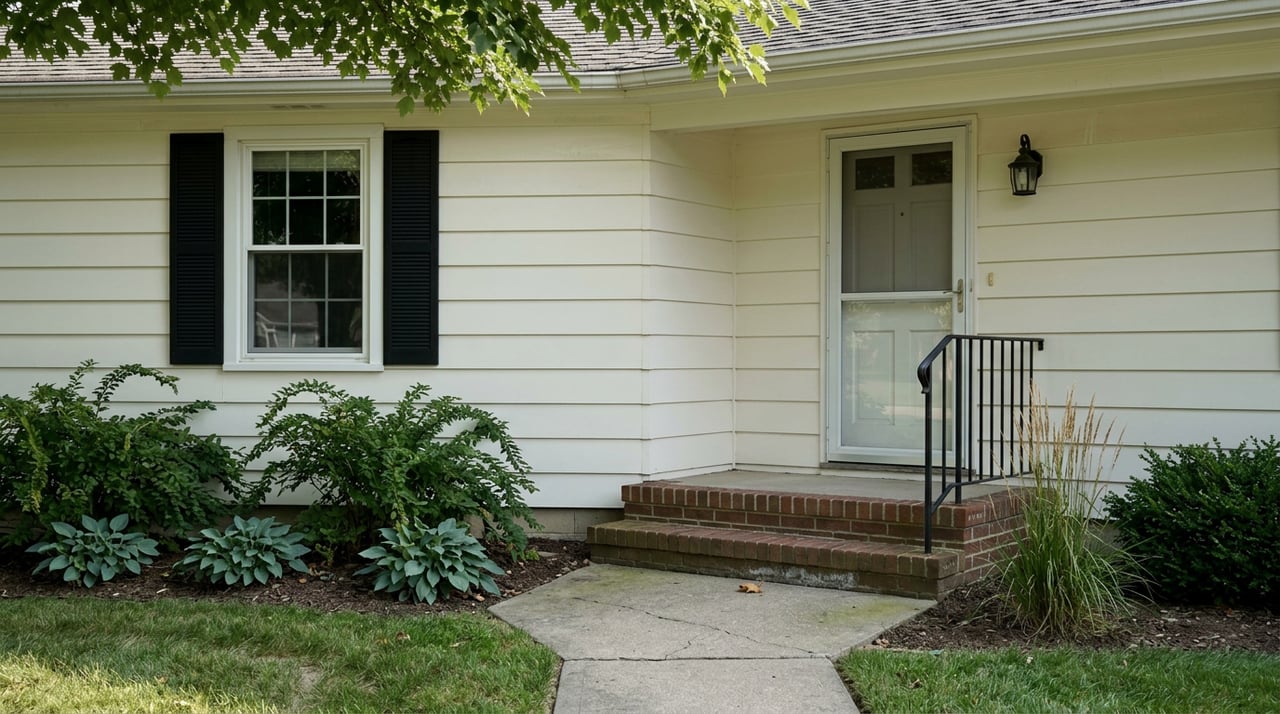
Union Township NJ CO Rules Sellers Should Know
Ask a real estate attorney whether New Jersey requires a certificate of occupancy to sell a house, and the honest answer is no. State law leaves that decision to each municipality. Sellers who search this question first, then assume the answer travels with them into Union Township, are the ones who end up calling their agent two weeks before closing asking why a building inspector wants into the house.
Union Township is one of the municipalities that chose to require its own resale certificate. The town's Building Department publishes a document called the Residential Resale Certificate, and it functions as a Certificate of Continued Occupancy under a different name. Anyone selling a one- or two-family home here goes through it, and the two items that most often stall the process are not zoning issues or structural surprises. They are a smoke detector swap and a ten-foot measurement in the kitchen.
The baseline is simpler than most sellers assume. New Jersey's Uniform Fire Code requires that before a one-family, two-family, or attached single-family home is sold, leased, or otherwise changes occupancy, the owner obtain a certificate confirming working smoke alarms, a carbon monoxide alarm, and a portable fire extinguisher are in place, a requirement laid out clearly on Wyckoff Township's fire prevention page. That certificate is mandatory everywhere in the state. It is not, by itself, a certificate of occupancy, and it does not require a full municipal inspection of the house's condition.
Whether anything gets layered on top of that baseline is left entirely to the town. Some municipalities stop there. Others attach a broader resale inspection covering zoning compliance, egress, and general property maintenance, an inconsistency that New Jersey real estate attorneys Riley and Gutman describe plainly: some towns require a full CCO inspection covering zoning, safety, and occupancy, while others only require the Smoke and CO certificate, according to their recent guide to New Jersey closings. Union Township sits in the first group.
The township's own procedure document, titled "Procedure for Obtaining Residential Resale Certificate," is published through the Building Department at Town Hall on Morris Avenue, and it spells out exactly what an inspector checks before signing off on a sale. This is the paperwork equivalent of a full CCO, even though the town's own form does not use that four-letter acronym.
Two requirements inside that document account for most of the friction sellers run into, and neither one is about the size or age of the house.
Smoke detectors have to be the sealed, ten-year battery type. The township's requirements are specific: existing detectors must carry a label confirming they were tested, any unit that is not serviceable has to be replaced, and a standard nine-volt battery swap does not satisfy the code. A perfectly working detector that takes a regular battery still fails inspection under this standard.
Placement is prescribed room by room, not left to judgment. The resale certificate calls for a detector at the bottom of the stairs to the first floor, another at the top of that same stair run, one within ten feet of any bedroom, and another at the top of the stairs from the second floor if the home has one. A finished attic needs its own detector. An unfinished one does not.
The fire extinguisher requirement is just as specific. It has to sit within ten feet of the kitchen, carry a 2A:10B:C rating, weigh no more than ten pounds, and be listed, labeled, charged, and operable at the time of inspection. A general-purpose extinguisher stashed in a hall closet on the other side of the house does not count, regardless of how new it is.
None of this would carry much urgency in a slow market. Union is not currently a slow market, even though the headline price growth that made news earlier in the year has since leveled off. Earlier in 2026, Union Township's own newsflash page announced that the town had placed 60th nationally in a ranking of the hottest housing markets in the country, a distinction the town attributed to steady commuter demand and thin supply, according to the township's own announcement. As of July 2026, the median list price in Union sat around $589,000, down slightly from the same month a year earlier, and listings were still going under contract in roughly 23 days, about the same clip as July 2025.
That combination is worth sitting with. Price appreciation cooled, but speed to contract did not. A market can stop climbing in headline price and still punish a seller for a slow paperwork process, because the buyers competing for a well-priced listing in 23 days are not the type to wait out a reinspection.
A 23-day market does not leave much room for a resale certificate to bounce back with violations. Attorneys who handle closings across the state note that certificates in many towns carry a validity window before they expire, and that scheduling delays are common during busy seasons, points made in the same Riley and Gutman guide referenced above. If a Union Township seller schedules the resale inspection assuming it is a formality, fails on an outdated detector, and has to wait for a reinspection slot, that delay lands directly on top of a closing timeline that buyers in this market are not inclined to wait around for.
The fix does not require a contractor or a permit. It requires calling the right office early and walking the house with the resale checklist in hand before anyone else does.
Does New Jersey require a certificate of occupancy to sell any home in the state? No. State law does not mandate a resale CO. It is a municipal decision, and Union Township is one of the towns that requires its own version through the Residential Resale Certificate process.
Is the Residential Resale Certificate the same thing as a CCO? Functionally, yes. The township's own document does the same work as a Certificate of Continued Occupancy in towns that use that exact term, covering the same smoke detector and fire extinguisher compliance items.
What if my house has hardwired smoke detectors instead of battery units? The resale certificate language addresses sealed battery units specifically. If your system is hardwired, confirm its service status with the Building Department directly rather than assuming it automatically satisfies the requirement.
Selling in a market moving this fast means the paperwork should be the easiest part of the transaction, not the part that costs you a week. If you are weighing a sale in Union Township and want a clear read on what your specific property will need before it goes on the market, The Ivanov Group can walk through the resale certificate process alongside your home's current value. Get Your Instant Home Valuation to start that conversation with real numbers in hand.
Stay up to date on the latest real estate trends.

Whether you're looking to invest, build, or find your dream home, The Ivanov Group is here to help. Contact us today to learn more about how we can be a part of your real estate success story.