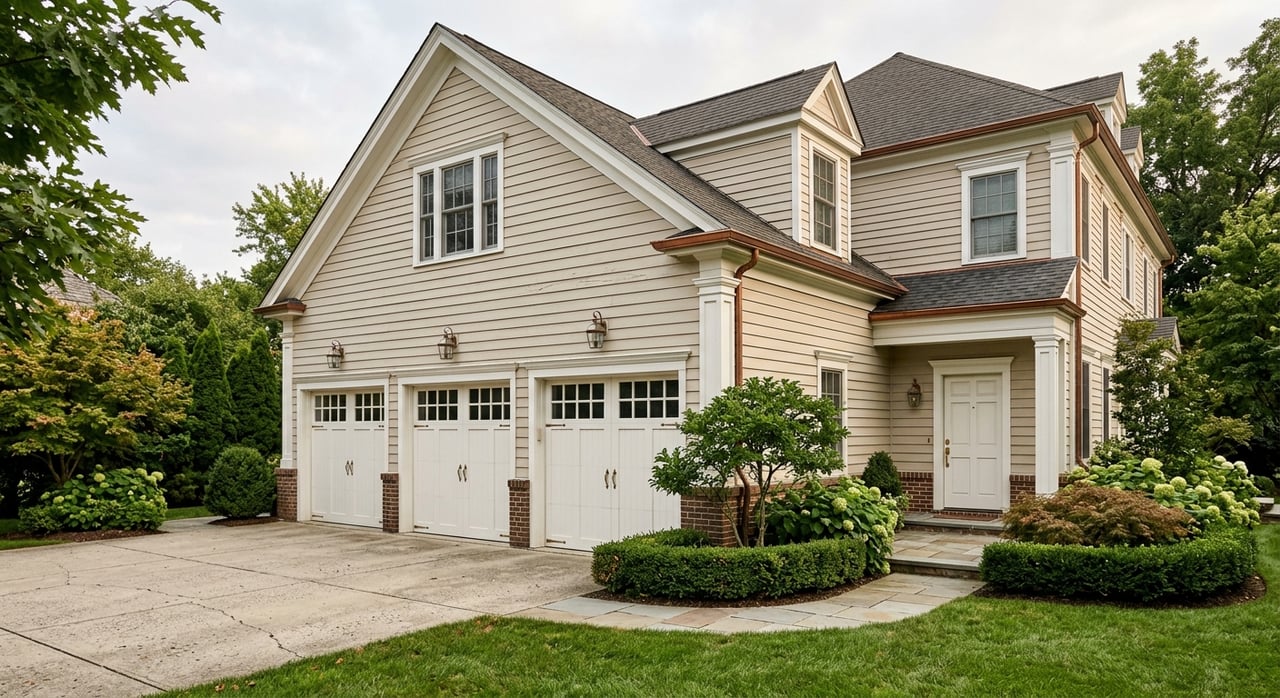
Fixer-Upper vs Turnkey Homes In Flemington
Wondering whether a fixer-upper or a turnkey home makes more sense in Flemington? It is a smart question, especially in a borough where older housing, limited supply, and historic rules can shape both your budget and your timeline. If you are trying to balance opportunity, risk, and long-term value, this guide will help you compare both paths with more confidence. Let’s dive in.
Flemington is not a market where home condition is a small detail. The borough’s housing stock is older and relatively constrained, with 25.0% of housing units built before 1940 and another 29.0% built between 1940 and 1960. Only 19.4% of units were built since 1980, which means many buyers are evaluating homes where age, maintenance, and renovation history matter.
Supply is also tight. The borough reports a vacancy rate of just 3.8%, and it is largely built out, which limits room for major future development. In practical terms, that often means your best option may be an existing home that either needs work or has already been updated.
The housing mix adds another layer. Flemington includes detached homes, two-family properties, smaller multifamily buildings, and larger apartment buildings. That gives both owner-occupants and small investors a range of choices, but it also makes careful property-by-property analysis essential.
A fixer-upper in Flemington can offer character, customization, and a possible lower entry point than a fully renovated property. In an older borough, that can be appealing if you want to shape the finished product around your style, budget, or investment goals. It may also open doors in a competitive market where move-in-ready homes attract fast attention.
That said, a fixer here often means more than paint, flooring, and cosmetic updates. The borough’s housing plan points to common rehabilitation issues like weatherization, roofing, plumbing, heating, electricity, sanitary plumbing, lead-paint abatement, and load-bearing structural systems. So if you are considering a project, assume your budget may need to cover hidden systems, not just visible finishes.
Older homes can also come with planning and safety steps that affect cost and timing. If a home was built before 1978, lead-based paint is a real consideration, and renovation work that disturbs it must be handled by lead-safe certified contractors. If materials may contain asbestos and the work could disturb them, proper sampling by a trained asbestos professional is also an important part of the process.
If the numbers work, a fixer-upper can give you advantages that a turnkey home usually cannot.
In Flemington, some single- and two-family homes may be especially suitable for rehabilitation because of smaller lot sizes and more manageable maintenance demands compared with larger properties. That does not make every fixer a good deal, but it does mean the right property can be compelling if you go in with realistic expectations.
The biggest risk is underestimating the true scope of work. In an older housing stock, surface updates can uncover electrical issues, plumbing problems, structural concerns, or permit-related questions. Those surprises can quickly change your budget and timeline.
You also need to think about approval paths. In Flemington, historic preservation is a major local factor. The borough says 54% of parcels and about 37% of the borough area are within the Historic District, and exterior work other than ordinary maintenance requires review through the local historic process.
If you buy in the Historic District, repairs, renovations, additions, demolition, and many exterior changes may need review before work begins. The borough advises owners to contact the Building Department early, and New Jersey’s Uniform Construction Code requires permits before constructing, enlarging, repairing, renovating, altering, reconstructing, or demolishing a structure, unless the work falls under ordinary maintenance.
A turnkey home usually appeals to buyers who want speed, predictability, and less disruption. If your goal is to move in quickly or avoid managing contractors, a finished home can feel like the simpler path. In a competitive market, that convenience has real value.
Recent market snapshots suggest buyers are acting quickly in Flemington. Redfin reported a median sale price of $549,671 in May 2026, homes selling in about 34 days, and roughly two offers on average. Zillow reported a typical home value of $645,923, a median list price of $679,817, and 68 homes for sale as of May 31, 2026.
Those data points come from different methodologies, so they are best used as directional context rather than exact side-by-side pricing. Still, the takeaway is clear: finished homes can draw attention fast, and buyers may pay for convenience.
A turnkey property may be the better fit if you value certainty over upside.
For small investors, turnkey can also mean earlier rent readiness. That may matter in a borough where 64.8% of residents live in renter-occupied housing and Zillow’s reported average rent was $2,590 as of May 31, 2026. Rental demand is clearly part of the local market, though each property still needs its own financial analysis.
Move-in-ready does not always mean risk-free. Because so much of Flemington’s housing stock is older, a polished home can still have deferred maintenance, permit gaps, or restrictions tied to historic-district rules. A fresh kitchen and updated flooring do not tell you everything about the roof, wiring, heating, plumbing, or prior approvals.
That is why buyers should still verify major systems and review permit history. In Flemington, an attractive finish package should never replace an older-home review. Convenience is valuable, but it should be tested, not assumed.
If you are deciding between the two, it helps to compare them side by side.
| Factor | Fixer-Upper | Turnkey |
|---|---|---|
| Purchase price | Often lower upfront | Often higher upfront |
| Customization | High | Limited |
| Timeline | Longer and less certain | Faster and more predictable |
| Project risk | Higher | Lower, but not zero |
| Historic review impact | Often more relevant | Still possible for exterior changes |
| Hidden costs | More likely | Still possible in older homes |
| Value creation potential | Greater if executed well | Usually less room to add value quickly |
The right choice depends on your priorities. If you care most about control and upside, a fixer may fit. If you care most about speed and simplicity, turnkey may be the better answer.
The cleanest way to compare a fixer-upper with a turnkey home is to look at recent nearby sales of similar age, size, lot, and location. Then estimate the likely renovation scope and subtract both direct costs and a cushion for risk from the fixer. This gives you a more realistic side-by-side comparison than list price alone.
You should also think beyond purchase and renovation. In New Jersey, property tax is an ad valorem tax based on assessed value and local budgets. That means any conversation about after-repair value should also account for how assessed value and the local tax context may affect your longer-term cost picture.
Whether you are buying a project or a move-in-ready home, these questions can help sharpen your analysis in Flemington:
These are not minor details in Flemington. They can shape how much cash you need, how long your project takes, and whether the home still looks like a good value after closer review.
A fixer-upper usually makes the most sense if you are comfortable with older-home uncertainty, permit timing, and the possibility of historic-review friction. It can be a smart path if you want to create value, personalize the home, or pursue an investment strategy with eyes wide open. In a built-out borough with older housing, that opportunity can be real.
A turnkey home usually makes the most sense if you want speed, less disruption, and a more predictable experience. That can be especially appealing if you are relocating, buying on a tight timeline, or simply do not want a renovation project to become your second job. You may pay more upfront, but the tradeoff is often convenience and lower execution risk.
In Flemington, the label on the listing matters less than the details behind it. With older homes, mixed property types, and significant historic-district coverage, condition and compliance often matter more than whether a home is marketed as updated or full of potential.
If you want help weighing a fixer against a turnkey home in Flemington, The Ivanov Group brings a boutique, data-driven approach to buyer and investor decisions, with the responsive guidance you need to move forward confidently.
Stay up to date on the latest real estate trends.

Whether you're looking to invest, build, or find your dream home, The Ivanov Group is here to help. Contact us today to learn more about how we can be a part of your real estate success story.